

Supporting human dignity through service: topic of LCU C3 Chapel
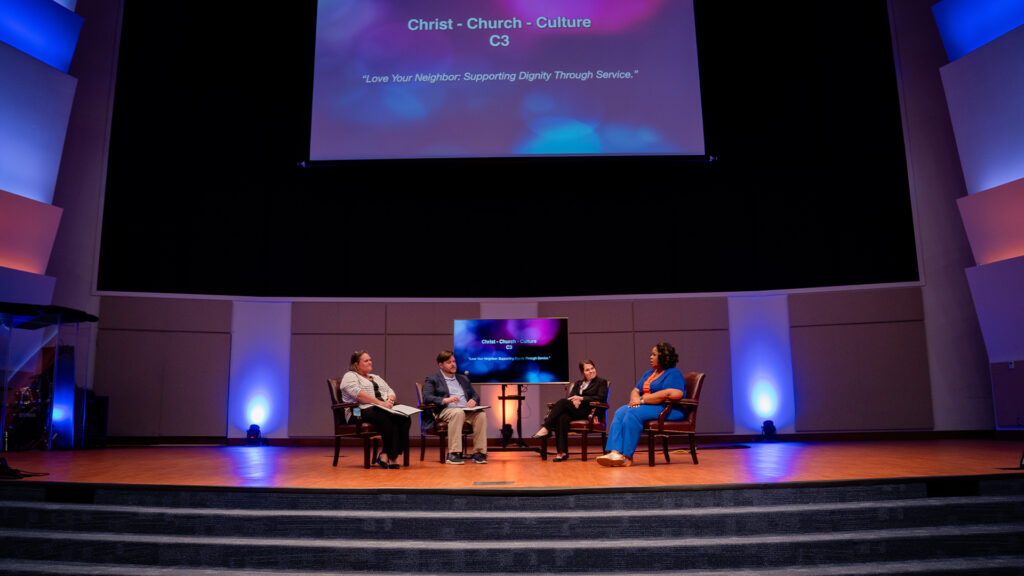
You never know what the person in front of you is going through. It’s important, especially for those in service professions, to always be mindful of respecting the dignity of the human being, regardless of the situation or problem.
Assistant Professor Dr. Dougald McLaurin hosted a roundtable discussion for the first Christ, Church and Culture event of the fall semester during Tuesday’s Chapel service. The topic covered was “Love Your Neighbor: Supporting Dignity Through Service.” Speakers included Assistant Professor of Psychology Dr. Mollie Wise, Director of Nursing Dr. Tomekia Luckett, and Assistant Professor of Social Work Dr. Alisha Thompson.
While the panelists came from the nursing, social work and psychology disciplines, the advice they offered was for anyone in any position of service to others.
One of the most important things to realize, Wise said, is the difference between sympathy and empathy. Sympathy means you pity a person. Empathy means putting yourself in another person’s shoes.
Thompson said no number of degrees makes you the expert in what another person may be experiencing.
“The person is not the condition they come to you with,” Thompson said. “And people have the right to self-determination.”
No matter the situation, a person has the right to make their own choices, she said, even if the person in the service profession thinks they should make a different decision.
“We have to love them where they are,” Thompson said.
Another important aspect of supporting the human dignity of those in need is to examine your own motives, according to Luckett. She used the example of people going into nursing: Is your primary motivation to serve people or to earn a good paycheck?
“Jesus was a voice for those who were hopeless,” Luckett said. “Nurses should be a voice for the dignity of the person.”
Wise said it’s important not to focus on the symptoms so much that you miss the person. Often, it’s easy to assign a person’s response to their struggles as a character flaw, but it is more likely a coping mechanism developed over their life.
“They may never have learned any different,” Wise said. “Meet people where they are. Some people may never have had anyone to believe in them. You don’t always have to offer a solution, and if you don’t listen to them, you can’t offer a solution.”
How would you want to be treated or judged in a similar circumstance of facing a similar crisis?
Practicing compassion is key in any helping profession, Luckett said.
“There’s someone somewhere who’d love to have the problem you’re complaining about,” Luckett said.
By allowing a person agency over their own circumstances and choices, you are treating them with dignity. Offer a listening ear and constructive feedback, while recognizing that decisions of how to deal with crises belong to the individual going through them.
“Resilience is built through overcoming difficulties,” Thompson said. “It’s not up to you to save the day. Leave your superhero cape at home. It’s not about you. It’s about them. Help empower the individual with strengths they already have.”
The purpose of C3 events is to lovingly challenge the troubling culture we live in with the biblical truth and love of Christ.
=================================================================
Media Release | September 9, 2026 | Pineville, Louisiana
Contact: Dr. Elizabeth B. Clarke, Director of University Communications | Elizabeth.clarke@lcuniversity.edu